Tuesday, March 19, 2013

Fly Tying Tuesday: Nail polish a DIY tool

"Don't look at me! I'm hideous!"  #pinkie : )

There are times when inspiration hits me and I just have to hit the vise to tie a very particular pattern.  More often, I'll run across a patter in a magazine or catalog that I'd like to try tying.  Such was the case last night when I ran across a recipe for "the pinkie" in Fly Tyer Magazine along with an anecdote detailing its effectiveness on wild brown and rainbow trout.

The Pinkie is typically tied on a streamer hook and is all pink.  Pink marabou tail, pink chenille body, pink hackle and pink bead head.  With no streamer hooks immediately on hand and with me being to lazy to venture to the garage for the proper materials, I thought I would see how this would look in more of a nymph look.  I also didn't have any pink bead heads, as I've never used them before.  Still determined to give this a shot, I ran to my wife's box of nail polish, found the perfect color and began to paint my masterpiece. I was pumped.

Turns out, nail polish takes much more time to dry than an anxious fly tyer has to wait, so I began tying in hopes of avoiding a mess.  Short story long, it didn't work out as well as I had hoped.  Heck, I'd eat the bug if I had a chance, but it's just not as pretty as I'd like it to be.  Moral of the story, paint 'em before you tie 'em.  This is a great options for those of us who have more black, copper and silver beads than we know what to do with and are looking to try something new.  Get a few beads painted up ahead of time and give them plenty of time to dry.  Add some sally hanson's hard as nails to make them extra durable.  It's also easy to paint them on the hook, just hold off on your tying until you know they're dry.

Sunday, March 17, 2013

The Brown Fly

My mom got me some cool magazines from across the pond for an unexpected xmas gift.  It's been fun to read about different flies, unique techniques and hear insider tips from guides in other countries.  I came across a recipe for a classic Salmon fly called the "Brown Fly" in Fly Fishing and Fly Tying Magazine.  This fly originated in Ireland and Scotland, becoming popular on dark windy days on slower runs.  It is a pattern by William Blacker (1850) and has gone through a number of transformations since then.

While chasing the big rainbows that move into the marina in the winter/spring months, I've heard stories from other fisherman who have experienced success.  One story from my neighbor quickly came to mind when reading about this fly.  He recalls fishing the marina with a "big brown fly with wings" and doing very well with the big rainbows and fall salmon.  Dark, windy days are commonplace in Pierre (especially so far this year), so I tied up a variation of the Brown Fly to try on the next gloomy day.  My wife thinks it should be called the Cardinal.   I don't know about that.  I just think it'll catch fish...

Of the "Brown Fly" variety.  Pumped to try it. 


Saturday, March 16, 2013

The Toothier The Better


They're getting a bit bigger...

While chasing spring rainbows in the bays and marinas of Pierre, it's inevitable that you'll eventually cross paths with the toothy northern pike that occupy the river system in abundance.  Pierre (lake Oahe in particular) is knows nationally for producing some of the largest spring northerns around.  While traditional fisherman utilize quick-strike rigs, treble hooks and large chubs or shiners; the right fly has a special way of enticing northerns to take a bite.  While I've yet to venture up top (to Lake Oahe) for spring/summer Northerns on the fly, I hope to this year.  40"+ fish are commonplace, and I'm willing to guess they would be more than willing to try the fly.  Not likely they've seen it much before.  Seems to me there is going to be some unmet demand this spring.  Time to get the boat ready...

This guy took a "dying" streamer presentation

Tuesday, March 12, 2013

Fly Tying Tuesday: The Kreelex

Last weekend was so much fun for me.  It only accounted for three fish (and almost a few other monsters) and was thanks, in large part, to The Kreelex.  The Kreelex is a fly composed of all flash and is almost irresistible to trout.  I've tied this pattern in silver and gold for rainbows, but gold and copper work well for brownies.  Tie some of these up and go hammer some early season trout.  Great pattern in the winter as well.  Double peace!


Saturday, March 9, 2013

So Pumped Right Now!

I don't really have anything to say at this point.  Still too pumped about today.  Persistence and positivity pay off I guess.  The photos will say it all.

1st of two hogs caught in Oahe Marina on Saturday

This is one of the many reasons why I fish.

I was so pumped!!

Friday, March 8, 2013

Agony of Defeat: Promise of Tomorrow

In search of the elusive Oahe Marina Rainbow
It's not easy to accept defeat on the water when acknowledging it is typically against the rules.  I'm fine with coming off a stretch of water with no fish because: a) I've likely caught fish there a time or two before, and B) spending time on the water is more than reward enough for me.  Unless, however, I'm chasing rainbow trout in Oahe Downstream marina.

Let me go back to the beginning.  I started this blog by writing about the possibility of catching 3, 5, 7, 9 pound trout with regularity.  That's how it used to be anyway.  Now, they are somewhat few and far between, but still there.  They cruise the sanctity of the marina throughout the winter months and into early spring in search of easy prey.  Sounds like easy pickins for fly guys.  Turns out, it's not that easy for me.

Today's weather report:  33 degrees, overcast and breezy.  "Perfect," I thought.  No other fisherman will be on the water, the fish will be relatively unspookable, and I can key in on a few select presentations that should do the trick.  I ducked out at 3:30, picked up the pup and hit the marina.  As I suspected, no fisherman and perfect conditions.  This was the day I would bring a big Oahe Marina bow to hand.  So I thought.

My uncle holds a nice bow taken in the marina back in the "glory days"
For the past three years, this challenge has eluded me.  Early on, my lack of dedication to the challenge persistently decided my fate.  Only getting to the marina on one or two occasions during undesirable conditions is no way to beat these big bows.  Even when I would put in the hours, the fish performing a perfect disappearing act or my inability to find the right presentation would again leave me skunked.   It wouldn't be so bad if I hadn't heard success stories from friends and family members.  My two uncles who reminisce about the days of catching 16+ fish in a day that weighed over 3 lbs a piece.  Other fisherman, whether by fly line or spinning real, landing 9+ lb rainbows and hanging their "trophy" photos in the nearby marina store.

So there I was, Lucy and I, on our first attempt at the elusive Oahe Marina Rainbows.  While I am always optimistic and confident when it comes to fishing, I've found myself beginning to doubt my skills as a fisherman.  I've had opportunities in the past and have not capitalized.  Maybe this is just one of those fishing scenarios that I cannot master.

Sloooow strip...pause.  Sloooow strip...pause.  My wooly bugger prince nymph combo looked great in the water, now if only...WHAM!!

The weight of a cinder block welcomed my hookset as only seconds later a bright rainbow body and large green head breached the surface violently splashing from side to side.  Back under water now the big fish makes a run for deeper water before breaching the surface yet again, this time in spectacular fashion.  My heart is pounding, my mind racing.  "Just get it to hand," I thought to myself.  Almost as quickly as that thought entered my mind, the hard pull on the line was no longer and the rod became straight yet again.  "NOOOOO!" I yelled in agony as the big rainbow disappeared into the depths.  I sat on the bank to contemplate how close I had just come to accomplishing my goal before warming my frozen fingers in the truck.  Defeated yet again.  I've got to stay positive.  Tomorrow is another day.  What's the forecast for Pierre?  35 degrees, 90% chance of snow, and 20 mph winds? Perfect!

Here is a bit more of what I'm missing out on.

Big hen
Like a big football!!

Thursday, March 7, 2013

Hiking Glacier 2012

I know this isn't fishing related, but this video makes me happy.  Highlights from our back-country adventure in Glacier National Park last year.  We had traveled to Glacier National Park on a family vacation when I was a kid.  I wish I would have had a greater appreciation for the park and all it has to offer back then.  Back-country is a different experience, but I really appreciated the beauty and remoteness of Glacier.  Especially back in Hole-in-the-wall;  a place where only 600 others visit annually.  Next time, I'll be back for the cutthroats and rainbows that call Glacier home. 

Enjoy the video!


Tying Tuesday Result: The Zebra Midge

This year's Tuesday Tyer sessions have been more of an opportunity for me to take in some fun stories and tell some of my own.  I would be lucky to tie two flies in the three hour session.  This past tuesday was different.  While stories were still prevalent, I hunkered down to get some flies tied.  Zebra midges and big streamers were on the menu.  Check out the tying video for the Zebra Midge below.  A quick and easy pattern that will produce throughout the year.

When I first started fly fishing, I couldn't believe some of the tiny patterns featured in fly shop bins.  "How the heck does thread catch fish?" I thought.  Well, when I finally had an opportunity to see these bugs in my seine net, I had a better understanding as to why these patterns work so well.  Next time you're fishing in spring or fall, or are in the middle of a midge hatch, do a quick seine to see the larva present.  You'll see why small and easy is the way to go.  Enjoy the video!


Tuesday, March 5, 2013

Rather Be Fishing: 2012 Highlights

Here is a short video highlighting a few of the fishing trips Lucy and I took in 2012.  We had a great time on the water together.  Hope to get out more in 2013 with Lillian also by my side.


Friday, March 1, 2013

Fly Tying video 101

I'm definitely a novice when it comes to fly-tying videos and tutorials.  I love the hobby, I tie effective fly patters, but it turns out I've been doing it all wrong!!  Hank Paterson shows how a real fly tying video should be made.


Saturday, February 23, 2013

Do's and Dont's: Get down deep


Deep seam bow caught on weighted san juan worm and split shot

I asked Tim what he was tying at last weeks Tuesdsay Tyers session.  "A bomb," he replied.  "I don't want to have to use split shots next time I'm trying to get down to those fish."  This heavily weighted fly consisted of a tungsten bead head, .20 lead wire and a "buggy" attire.  Whether you are using weighted flies, weighted line, or split shots, getting down to the fish is essential to catching them in deep water.

Tim was preparing flies for our upcoming trip to the Bighorn River in Montana.  The Bighorn is notorious for this requirement.  A spring trip in 2012 welcomed us with a midge hatch and rising fish.  Our best success, however, was found deep, with zebra midges and skinny nelson patterns.  Yeah, you could catch fish on soft hackle emerges and dries (certain times of the day produced very well), but your catch rate would be more consistent fishing deep.

But it meant fishing deep properly.  That meant a weighted fly and often multiple split shots were required to reach those fish with a realistic presentation.  That was your best shot for success.  This obviously depends on the season, water level, water clarity and food options available, and varying your presentation is key to finding the right amount of weight required.  Some casters will start big, getting down to the bottom as quick as possible and adjust from there.  Others with make their best guess as to how they will get close and add as necessary.  Either way, you'll be on the bottom, and that means you're going to lose flies.  You'll have to come to grips with it if you want to catch fish deep.  It's all part of the game, but you have to play to win.  You must be willing to give up a few of those flies that you worked so hard to tie up, or spent hard earned cash to purchase.  That's the only way you can beat deep water and gain the confidence to work the water properly.  You'll catch more fish and will be a more experienced fisherman because of it.  


Thursday, February 21, 2013

Favorite Shots: Lillian Edition

While taking a stroll down memory lane this evening, I got into some photos and videos of my little girl Lillian and I fishing together.  She enjoys fishing so much!  I just hope I can dedicate as much of my time in the future to getting her on the water early and often.  Mya, now one, will definitely come along for the ride.  Here are a few of my favorite photos from our fishing time together so far.  Enjoy!

Ol' Whitey giving Lilly a tail slap before the photo

In search of her first fish ever

Her first fish (caught on a soft hackle hares ear)

The first white bass she landed on her own (caught with marabou clouser)

She actually wanted to hold this smally after bringing it in on her own

Definitely did not want to hold the "kitty cat fish"

Wednesday, February 20, 2013

Wax on...Wax off: Keep your line clean

Whether using line cleaner or dish soap, cleaning your line will make you more efficient on the water

Owning proper fly-fishing equipment that fits your particular experience level and current fishing conditions is only half the battle when improving your on-water experience and effectiveness.  Consistent care and maintenance for that equipment is arguably as important to keep your gear functioning properly all year long.  I'll argue that line care is one of the most important things a fishing enthusiast can do to make his/her time on the water more effective, efficient and enjoyable.

When I began actively fly fishing nearly 7 years ago, it was with a hand-me-down rod and reel from my uncle.  A great rod and reel that I still use on occasion.  Without understanding the maintenance required on fly equipment as a beginner, I rarely cleaned my fly line, and paid the price for it.  My first year was spent casting a dirty fly line on my "new rod".  A hassle to say the least, and a roadblock to my pursuit of fly-fishing improvement.  That is, until, I fished with my good friend Keith Wintersteen at the Buffalo Roundup in Custer State Park.

He and I hosted a number of guest to a day of fly fishing on Center Lake.  An amazing experience all around, thanks in large part to Keith's advice before the excursion.  As we were checking leaders, tippets and fly selection I mentioned the trouble I was having shooting my line.  I had been practicing a lot, but was not making much progress.  Keith said he had just the thing to try, and quickly ran to his vehicle to grab some line cleaner and a cloth.  I walked the line out to the backing, Keith applied some line cleaner to the cloth and reeled the line in as he cleaned it.  "Here you go, try it out," he suggested.  It was like he had handed me a brand new fly rod and reel.  My fly casting improved along with my knowledge of equipment maintenance and made for a very enjoyable fishing experience with our guests.

I recommend cleaning your line at least once per year, and anytime after you run into muddy water, algae blooms or salt water.  Whether you utilize a line cleaner of your choice or a light dish soap, keep your line clean, improve your casting ability, and have a more enjoyable time on the water.

Thursday, February 14, 2013

Whatcha Readin?: YGF


I've really enjoyed the Yukon Goes Fishing Blog for the past few years.  The very entertaining videos and great stories keep me captivated and inspired to grow as a fisherman.  His editing skills can make the "pros" look mediocre.  Check him out when you have a chance.


Tuesday, February 12, 2013

Fly Tying Tuesday: DIY Rubber Legs


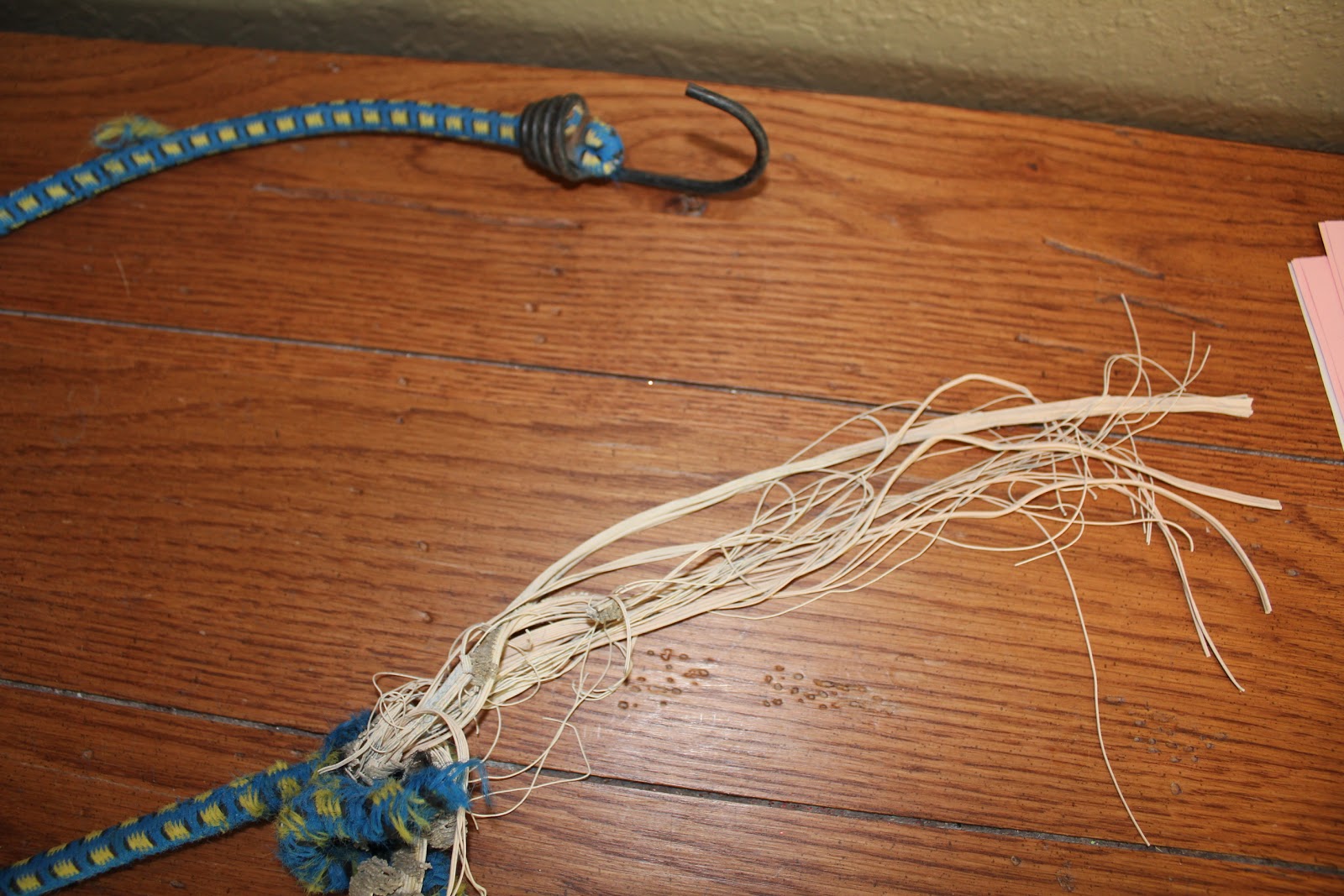
Various sizes and diameters inside as well

The insides of my old bungee cord
As a novice fly-tyer (and very frugal individual), I often struggle to justify spending $4.00 for a pack of rubber legs.  I know, it's not that bad.  But if you are purchasing a number of colors along with many other tying material required, that can be a pretty big expense as a newbie.  For that reason, I've been searching for ways to "cheat the system" while getting fly-tying materials for little or nothing.  That is why I was so pumped to stumble upon a great source for rubber legs while cleaning out the garage last weekend.  

I use bungee cords all of the time.  Whether I'm strapping down the boat cover, securing camping supplies on the trailer, or filling a tube-less tire, bungee cords are convenient, cheap and readily available.  The elastic material of a bungee cord is usually made of natural or synthetic rubber strands bound together by a fabric covering (we're not talking about the thick black cords here).  These strands are in large number, extensible (great stretch factor), durable and exist in varying diameters within a single bungee.

Extraction was relatively easy.  I was in my Spouse Approved Location (SAL) to remove the nylon cover.  This was a messy process with a knife.  I'd use an exacto next time around.  While I've yet to utilize these while tying, I can't wait to explore the possibilities.  I'll be dying them next week and using them in some articulated streamer patters I'm tying for the Bighorn River in April.  I'd be interested to hear if these have worked for you in the past, or if there are some other ways you've "cheated the fly-tying system" to create effective patters with unconventional materials.  My unconventional list of materials is growing all the time.  I'll post it when it gets large enough so we can all compare notes.  What is your favorite?