Tuesday, July 29, 2014

Why I chuck the Meaty Goodness

Rainbow with a vendetta

Imagine walking along a stretch of new water, enjoying the beauty of the area while searching for "fishy" holes, when you come across some faster riffle water cascading down into a bottleneck that then plunges into a deep hole.  If you are like me, you will stand drooling for about 10 min before you snap out of it and begin preparing for a presentation.  But how do you present to the fish holding therein?  Heavily weighted nymphs might do the trick, however, they are difficult to keep in the strike zone for an extended period of time, not to mention the difficulty had ensuring a proper/natural presentation.  Dries are always a possibility, but can easily get lost in the turbid water by fisherman and fish alike.  So what's a guy/gal to do?

There's only one solution...Give 'em the MEAT!

It's no secret...Trout are some of the most voracious, greedy carnivores in a river/stream/lake ecosystem.  They, especially the larger fish, will eat almost anything presenting itself as a potential meal. While trout will typically key in on specific food sources that will require the least amount of energy to obtain, they are always in search for those opportunities to obtain a high calorie morsel.  This is especially true in water systems holding a large number of said morsels.  Last weekend we found ourselves fishing around crayfish, large leopard frogs, and plenty of small baitfish.  It only made sense to show them something that could make their day and fill their stomach.

Not only are trout massive predators, but they are also territorial.  In a river system, the larger fish will hold in various locations, but can often be found in the front of the chow line.  My first presentation to the fish above was altered when my fly line found a rock in the riffle.  While quickly bringing in my articulated streamer to make another cast, this bad boy chased it all the way out of the hole before darting back in.  I quickly made another cast and found him hammering the streamer with anger and force.  He may have been that hungry, or he may have just been saying, "get out of my spot bro".  Either way, it worked like a charm.

The next time you find yourself drooling over a fishing hole, give em the meat first.  You'll be glad you did.  

Tuesday, July 22, 2014

Hit It at the end of your drift


How many times have you drifted your flies through a nice hole or seam only to begin lifting your rod at the end to make another presentation with a fish at the end of your line.  It has happened to me a number of times.  I'll become complacent, especially after a few casts without fish and begin looking back for a clear spot to back cast, or start looking ahead to the target casting area and a fish will take the fly at the last moment.

When drifting nymphs under an indicator it's important to always finish your drift with a quick hook set, regardless of what you did, or did not see.  This has paid dividends on more than a few occasions when I would have likely missed the strike by lifting the rod to cast, or may have lost the fish due to a poor hook set.  Don't get caught off guard by a quick trout at the end of your drift.  Give a quick hook set prior to your next presentation, and bring more fish to hand on your next outing.

Monday, July 7, 2014

Before it was Cool to Like Carp

Top Lip...Just how I like it.


I like to think that my brother, our friends and I started the carp fishing trend before it became mainstream and "cool".  We grew up in Rapid City.  There was a pond by the Rapid City speedway that we so lovingly referred to as "the pond down by the racetrack".  Some of my fondest fishing memories come from a time where we were armed with nothing but spinning tackle, a can of freshly dug worms from the garden or canned corn, an egg sinker, a gold aberdeen hook, and youthful anticipation.  Back then, it wasn't about catch rates, size or bragging rights, it was just a grudge match between us and the most powerful fish to swim in fresh water.

While we were only in pursuit of the common carp, to us it felt like a hunt for a mythical creature with extraordinary powers.  They broke lines, eluded the net, dragged rods and reels to a watery grave, and filled our dreams with excitement and wonder.  We had names for many of those fish that got away, hoping that someday we'd feel their fight at the end of our line again.  Fishing was more simple back then, and seemed a lot easier.

Fishing for carp never got boring or went out of style.  Today it's similar only on a national scale.  Magazines, tournaments, television shows, websites and blogs all devoted to the "slimy" and "ugly" nuisance species.  I'm quite confident that I won't be fighting off fishing traffic for this terrific fish in my neck of the woods anytime soon.  Until that day comes, I'll enjoy roaming my home waters with pup in toe, reminiscing on a time before fishing for carp was cool.

Monday, June 30, 2014

Casting Tips for Beginners


The nice weather has not only allowed for more fishing adventures this spring, but it has permitted the girls and I to take some time for casting practice.  I thought this would be a great time to give some tips on fly casting for anyone who may be interested in getting started.  When I first started, I used trial and error to figure out the best casting style for me while picking up tips and tricks from other fishermen along the way.  There were many frustrating days on the water.  Catching fish and consistent improvement kept me coming back for more.  Here are my tips for becoming a proficient fly caster:

1:  Don't be afraid to fail:  This is going to happen.  Sorry, it's true.  You must be willing to accept that you are not going to start your fly casting career like Brad Pitt from A River Runs Through It.  You will fail and you will learn from your mistakes.  Take the good with the bad and become better for it.

2:  Get out on the water:  I can't say enough about casting in the backyard, or in an open field to get the basics of timing and rhythm down.  It is invaluable.  There are, however, too many intricate details about casting on water that makes it an entirely different game.  When I was coaching basketball we promoted the "practice like you play" philosophy.  Make practice and your energy level as close to game time situation as possible.  I promote the same for fly casting.  If you are not on the water, you are missing a very important element that will greatly influence your casting.  And you won't catch any fish...Get out on the water to practice...

3:  Shake hands with the rod/Keep a straight wrist:   This is a two in one tip combo platter.  When you first hold a fly rod, act like you are shaking hands with it.  That's the grip you want to use.  Also notice how firm your wrist is when you give a firm hand shake.  It should be the same while you are casting.  When you go into your fly casting motion, remember not to break your wrist.  Breaking the wrist will lead to over extending the rod and creating problems for your fly line in the backcast.

4:  10 and 2:  Tip #3 leads into this perfectly and is the next step in the fly casting process.  You've heard it all before in driving and in fly casting.  The old adage of 10 and 2 works, so please use it.   This is especially important if you plan on doing a lot of false casting (where your line is in the air for multiple casts).  Your fly rod is an extension of your arm, so just make sure you stop your arm and wrist  at 2 o'clock on the backcast and 10 o'clock on the forward cast.  This will give you the nice loops in your fly line and prevent tangles.

5:  Slow, accelerate, stop:  Rather than whipping fly line around, I like to consider casting as PULLING the line off the water and PUSHING it back on.  Only the same amount of force used while pulling is needed to push the line back onto the water.  Don't feel like you need to throw it out as hard as you can.  Think of this tip while you are pulling and pushing.  When coming off the water, so it to yourself, "slow, accelerate, stop".  Slowly pull the line off the water while you accelerate (its ok to use a little muscle here) into your backcast and stop abruptly at the 2 o'clock position.  Repeat step one when you are bringing the line forward.  Wait for the line to load (see tip 6) slowing begin bringing the line forward, accelerate into the forward cast and stop abruptly at the 10 o'clock position or laying the fly line out on the water be bringing your rod to a horizontal position.

6:  Slow Down!!:  Out of all of these tips, this and keeping the wrist straight are by far the hardest habits to break.  Whenever someone new gets a fly rod in their hands they instinctively want to whip it back and forth as fast as possible.  Slow down.  Allow the line to load (let the loop straiten out) on the backcast before coming forward with your line.  When you begin your cast, try saying to yourself, "I love South Dakota" before coming forward with your line again.  That is all the time your line needs to load up before you bring it forward again.  Be patient and let the flyrod do all the work.  Again, only the same amount of force used to bring the line back is needed to bring the line forward again.  Let the rod do its thing.  That's what it was designed to do.

7:  We talkin bout practice man...:  The best way to become better at fly casting is the practice the fundamentals.  Get a practice casting rod to start.  Try and do it every day, even if it's for one minute.  The more you practice the fundamentals, the better you will become.  Don't be to high and mighty to ask for help either.  Great painters weren't born good at painting, they're good because they paint a lot.

Everyone's cast is a bit different, and you'll likely find little tips and tricks that help you become a better fly caster.  Take these tips out on the water next time you go out to practice.  Hopefully they will prevent frustration and help get you on top of your game in no time.  Now go fishing!!


Wednesday, June 25, 2014

How Do you Spell FUN?

Murdich Minnow strikes again

Judge:  Your next word, for the fisherman's spelling bee championship of the world, is FUN.

Me:  Will you use it in a sentence please?

Judge:  I love having fun on the water.

Me:  Fun.  S-M-A-L-L-M-O-U-T-H.  Fun.

Judge:  CORRECT!  You win.

If you asked me to think of one word to describe smallmouth bass fishing and FUN would be the first thing that comes to mind.  No matter the season or fishing style, it's just plain-old fun!  The fight, the strike, the hunt and the release all make for an extraordinary time on the water chasing an amazing fish.

What makes these fish so fun to catch is in their DNA.  They are a member of the sunfish family, but are voracious feeders through the spring, summer and fall months.  They prefer rocky shorelines and underwater structure and can be fairly easy to find.  Once you do find them, their predatory instincts will leave you anticipating a strike on each cast.  If that's not enough, smallmouth are, pound for pound, some of the toughest fish you'll find in fresh water.  Like the offspring of a bullet train and a tonka truck running wild on the end of your line.  After 20 fish or so, I'll wish you good luck wiping the permanent smile off your face.

The smallies are going strong here in Pierre.  If you have a child interested in getting some practice with their new fly rod, this is a great opportunity to put them on abundant, aggressive fish.  Once they hook an 18 incher, they'll be hooked for life.

Friday, June 20, 2014

Walker's Cay Chronicles


Here is a great resource for anyone interested in watching some old episodes of Walker's Cay Chronicles.  Great storytelling, genuine enthusiasm for the sport and for nature, and some awesome fish.  No Rock 'n' Roll, heavy metal hero shots required!  Enjoy...

http://hellsbayboatworks.com/media-pages/media-walkers-cay-chronicles-1


Wednesday, June 18, 2014

Fishing on the Big Screen...


A friend and I were catching carp the other day when he quoted one of our favorite fishing movies.   It got me thinking about the great fishing movies that I've seen.  I can't say that I've seen many.  Here are my top five.  I know there are some that didn't make the cut, but this is a top five.  If you have others that are a must-see, please comment.  I need to broaden my fishing movie horizons.

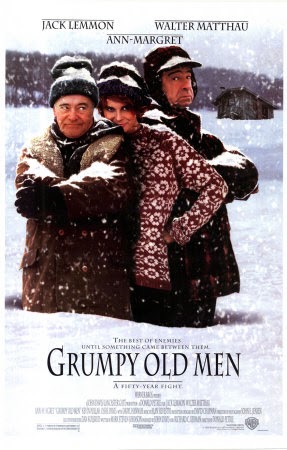
#1 - Grumpy Old Men:  Not only is this one of the greatest fishing movies of all time, it is one of the great "one line" sources of all time.  So many one liners, in fact, that there is an IMDb page dedicated to quotes from the flick.  I really need to watch this movie again.  

#2 - Grumpier Old Men:  Sequals usually suck, but this movie carries on right where they left off.  Hilarity ensues.  

#3 - Doc of the Drakes:  This is a 20 min short film about a doctor fishing the drake hatch in Idaho.  He has Parkinson's.  Inspirational, captivating, funny and genuine.  I've yet to see the sequal, "Hit em again Doc" but I'm sure it's great too.  F3T jipped me out of catching it last year in Rapid City.  Will never go to that event again.  (Bitter!)

#4 - A River Runs Through It:  I certainly enjoyed this movie when I was younger, but don't seem to appreciate it as much now that I am a fly fishing enthusiast.  This has become a benchmark for anyone who doesn't fish to gain perspective into the lives of those who do.  That is not the most fair assessment, in my opinion.  Still a pretty good movie though.  

#5 - Where the Yellowstone Goes:  A Hunter Weeks documentary following a group of people as they drift the Yellowstone.  They discuss the history of the Yellowstone River, current challenges facing this delicate ecosystem and how we can better care for our valuable natural resources.  They meet colorful characters along the way and, of course, do a little fishing in the process.  It was fun to watch.

Next time you are sitting around the tying desk during the winter time, pop one of these in the DVD/Blu Ray.  You'll be glad you did.

Monday, June 16, 2014

Slimy and Ugly

Does this look ugly and slimy to you?  
The other day I told a kid I enjoyed fishing for Carp the most.  When I asked if he liked carp he replied, "Not really..."  "Why not?" I asked.  "I don't know... they're ugly and slimy," he replied.

I would argue that anyone that has had the opportunity to admire a carp up close, or pursue them with a fly rod, would refrain from using descriptive terms like "ugly" and/or "slimy".  I understand that beauty is in the eye of the beholder, and is completely subjective.  I don't expect everyone to share in my fascination of this species, or even enjoy fishing for them as much as I do.  I only ask that you refrain from judging a fish before you've fished for it and/or touched it.  Put a northern and a carp in a slimy grudge match and the northern will come out slimier every time.

I believe the common carp has a bad rep for two reasons:

1 - Their lifestyle (depending on the fishery) is a bit less lavish than people would like to see.  Thought, by many, to eat trash and live in "dirty" water, commons make their living scavenging for any aquatic worms, insects or crustaceans that await.  They are always seen while fishing for other species, and every-so-often, caught by accident when one grabs a nearby crawler or hapless minnow.  When the fight is on, there are nothing but positive remarks from the angler hauling in their trophy.  That is until they see that pretty face smiling back at them.  Then it's, "Oh (explative)!  It's only a (explative) carp!"

2 - Their status as an invasive species and relation to Asian/silver carp don't do them any favors.  Their reputation as a "trash fish" is becoming stronger by the day.  I don't know how much research there is to back it up, but Common's can cause damage to water ecosystems by harming native aquatic plant species with their feeding habits, muddying waterways, contributing to increased algal blooms and have the ability to procreate rapidly and resist extreme change in conditions.  They are well oiled evolutionary machines.   I need to continue digging for research connecting the common carp to the loss of fish and waterfowl in a particular body of water.  I don't know if such a thing exists.  Regardless, it causes folks to be concerned, and that concern morphs into disdain for an entire species.  They've been around since 1880 in the midwest, and our fisheries are pretty amazing.  Where's the evidence that suggests otherwise?

Saturday, June 14, 2014

Naming My Rod


My Echo 8wt fly rod and I have been spending some quality time together lately.  Each time I take her out of the case, it feels so impersonal, like we're on a first date over and over again.  She's definitely earned her keep and has become a valuable member of the family.  It's time "she" gets a name...

After reading up on the subject, it seems anglers will typically name their fly rod only if they had a hand in building in.  I get that, but I'm never, and I mean NEVER, going to attempt building a fly rod.  There are so many economical rods of high quality on the market, I could never justify the time and expense incurred while rod building.  I also noticed that the majority of names take a "play on fishing terms" spin.  "Trout Slayer", "Never Skunkt" and my favorite, "Lord of the Flies".

I'm not compelled to follow tradition in this regard.  Unconventional thinking is the trend in fly fishing nowadays.  It will only breed innovation in a fly fishing world where traditional thinking is commonplace.  This will just be another opportunity for me to do my part to think a bit different from the norm.

I've got five names that I really like a lot.  Some of them unused child names, others inside stories going back to high school, and one that I just really like.  Here are my top five (in no particular order of preference):

  • Glory-a
  • Raquel
  • Shaniqua 
  • Quinten
  • Mackenzie  

Any of these names will work great, but this is for the long-term.  That's why I need some help.  Tell me which of these is your favorite.  The one with the most votes will be crowned the winner.  Also, tell me what name you have for your special fishing rod.  I'll even throw in a prize for the name that strikes my fancy the most.  Best name will win a lanyard.  Let the voting begin...

Tuesday, June 10, 2014

Fly fishing Misconceptions

Stock dam largie on an articulated worm

"You can't fly fish in Pierre...Can you?"  

"Don't you have to go to the hills to fly fish?"  

"I didn't know you could catch bass and walleye on a fly rod."  

"Isn't fly fishing just for trout?"


When I first got into fly-fishing, I thought much the same about this great sport.  Of course, I loved catching trout, and fly fishing is a very effective way to do that.  But I never, in my wildest dreams, thought I would be hammering huge white/smallmouth/largemouth bass, northern pike, carp, walleye, buffalo, gar, catfish, chinook salmon, crappie, bluegill, perch and yes...rainbow trout, all from the finest state capital in the country, and all on the fly.

I participated in the free kids fishing weekend at Downs Marina this past weekend by doing fly tying demonstrations for all the kids after they got off the water.  A great event for kids in the Pierre/Ft. Pierre area.  I was encouraged by all the great questions asked by kids interested in what I was doing and the flies I have tied.  "What fly is hardest to tie?" "What is your favorite fur to use?" "What is your favorite fish to catch on a fly?"  "What can you catch with this fly?"  It was really great to chat with kids about the effectiveness of fly fishing and how it relates to the type of fishing they've grown to love.

The parents, on the other hand, were shocked to see me at such an event.  The questions at the start of this post were prevalent.  But that's ok!  It was great to chat with people interested in the sport of fly fishing.  Even better, it was awesome to dispel some prevailing myths in my home city.  My favorite bit of dialog came soon after I had finished tying a murdich minnow:

Interested Pierre resident:  So do you just tip that with a minnow then?
Me:  Nope, this, by itself, is the minnow
Resident:  And they eat that??  (his reaction was priceless)

I'm not surprised by the responses.  It's not a big thing in South Dakota.  Especially in one of the Walleye meccas where a white bass is considered a nuisance to many and carp are considered "ugly" and "slimy".  I welcome the chance to tell people about what I do, why I do it, and how I believe it will likely be the next big thing in South Dakota fishing adventures.

I also believe spreading knowledge will help advance the sport as a whole.  Engaging young people is paramount, but any opportunity to inform adults about the benefits of fly fishing need to be cherished.  I made a lot of progress with the general public this past weekend.  I look forward to future conversations about this "next big thing" in South Dakota fishing.  

Monday, June 9, 2014

Crappies on the Fly

Sauk Lake Crappie


Crappies are pretty easy targets throughout the spring and summer months.  A fly rod offers many advantages to presenting the perfect fly to these delicious little panfish.  Here are 5 tips that will have you hauling in the crappies from the docks like it's going out of style.

1.  Small flies catch more fish:  Crappies love minnows, but they are opportunistic feeders and will sample any bug or aquatic insect that happens their way.  Some anglers tie flies similar to those tied for bass.  While the bigger fish will hammer those large flies, you'll catch both large and small fish on downsized rigs.  I prefer small wooly buggers, soft hackel nymphs (hares ear or partridge and orange) and dry flies/terrestrials when they are aggressive.

2.  Keep the fly in the strike zone:  This requires you to have a good understanding of the environment in which the fish is currently holding.  How deep is the water?  Are the fish suspended, or on the bottom?  Is there structure or vegetation surrounding the fish?  Crappies are always looking up for their meals.  Fish below them, and you won't have much luck.  That's why I rarely use a lot of weight when fishing crappies with the fly.  Even when they are holding on deeper structure, a small amount of weight will get the fly down slowly while allowing you to entice those fish for as long as necessary

3.  Find cover, find fish:  This is fairly obvious, but crappies (along with many other fish species) love cover.  Not only does it protect them from predators, but it offers shade in the summer a perpetual possibility for food.  Overhanging/downed trees, docks, weed lines and underwater structures (manmade or otherwise) all have great potential for holding schools of crappie.

4.  Add movement to your flies:  Adding on to tip number two, a slow sinking fly is made more effective by materials that possess movement under water.  Marabou, soft hackels, ostrich herl, anything that will undulate as it slowly drops toward your target will be very enticing to a crappie.  They won't be able to resist just one bite.

5.  Anchor up:  Once you find some fish, you may be able to stay on them for a while.  Anchor up and start casting.  You'll be surprised at how many fish you can pull out of one hole.  Patience will pay off in this regard.

Remember these tips on your next crappie fishing adventure, and you'll have some nice hero shots and a few slabs for the frying pan.

Yoi Tsuri (Good Fishing!)

Wednesday, June 4, 2014

Secret Spots

Common Carp from Carp Lake X1-27/b (shhh!  It's a secret...)

Think of that one spot.  You know the one.  The spot where you can go at anytime to fish without finding a soul.  A spot where the well balanced fisherman can seemingly walk across water on the backs of prevalent fish.  A spot where, "fish on!" is heard more often than the occasional expletive.  These spots are not plentiful, but they do exist.  When you find one, you can count your lucky stars, and then catch as many fish as you can.  Enjoy the moment, for you never know when the magic might end.  Some of my favorite spots have become ordinary because of human interaction, harsh weather, or mother nature playing a different card.  Enjoy these amazing opportunities to be closer with nature, over and over again.  You never know when "the spot" might just revert to being "a spot" again.

Tuesday, May 27, 2014

It's all about the fluorocarbon...

This whitey couldn't resist a perfect clouser presentation on fluorocarbon
Whether I'm fishing clousers in the spring to hungry white/smallmouth bass, chucking big gnarly jointed streamers at bows and browns, or delicately presenting a swimming nymph to a school of carp, my fly will be tied on to the end of a straight up piece of fluorocarbon.  Not only will casting and turning over these gaudy hunks of meat become much easier, You'll have more power and confidence to end the fight as soon as possible and get your fish back in the water to catch another day.

Many fly fishers only use the tapered leaders because that is what's sold in the stores.  I know I did when I first started out with a fly rod.  I thought,"oh, here's a leader they have conveniently labeled for me so I know what I can catch with it."  Blah!  I appreciate the fact that there are certain circumstances when a leader will make or break your day on the water.  To me, it only matters in nymphing and dry fly fishing...That's it!  I was oblivious to just how versatile the sport could be in the context of catching a wide range of fish species with very little learning curve.  With all the possibilities that exist, why would you decide to limit yourself to a leader specific to one species?

This time of year, I only carry fluorocarbon, tie on a 9' leader as needed, and go catch fish.  Here are the six (6) reasons why I use straight fluorocarbon leaders in almost all circumstances:

1.  No knots:  I hate it when things get caught up on the knots in my leader.  Whether it be line, slime or debris, they can be a hassle.  Not any longer!

2.  No tippet:  There is no more need to consistently add more tippet once you've cut it down.  Just put on a new leader after you wear it down a bit and you're good to go.

3.  Easier to cast:  It takes a bit getting used to, but it is much easier for me to cast than with a tapered leader.  I would even argue that my fly casting overall has improved since using it.  Casting a distance and turning over that fly, especially with big flies, is no longer an issue.  I would suggest everyone try it at least a few times to see if you like it.

4.  Stealthy:  It's been said that fluorocarbon line is less visible under water than its mono counterparts.  I'm not a fish, and I've not conducted any underwater visuals to test this hypothesis.  I take their word for it considering I catch a lot of fish.

5.  Fighting power!:  I prefer to fight fish as quickly as possible in order to lessen the stress put on their little fish bodies.  Fluorocarbon gives me the strength and confidence I need to make short work of my adversary and get them back in the water to freedom.

6.  Abrasion resistent:  I started using fluorocarbon leaders on all of my walleye rigs when an influx of hungry northern pike were making walleye fishing a bit of a chore.  You'd hook a northern, and after a few seconds, you'd be tying on a new hook.  Once I started tying my rigs with fluorocarbon, catch rates were up and lost fish went way down.  Then I started using it for big rainbows and northers on the fly, and the results spoke for themselves. Coincidence?  I think not!

Not a flashy tip by any means, but a good one if you want to improve as a fly fishing enthusiast.  Remember, it's ok to try new things, and it's ok to fail.  That's the only way we'll get better at our craft.

Monday, May 26, 2014

Fly fishing...The Next Generation


Hooking a capital city walleye

I firmly believe that fly fishing is the next big thing.  It's already big for those of us who are committed, but I'm talking about the majority.  Everywhere I go, people want to talk about fly fishing.  And this is a very GOOD thing.  More fly fishing enthusiasts means more conservation minded individuals to help protect our waterways and ensure future fishing possibilities.  But how do we get them hooked?  Heck, do we even want them hooked?

I get it...We like our fly fishing the way it is.  We don't know more anglers crowding up our rivers and streams.  But imagine how much nicer our waterways would be if we had a large majority of our fishing enthusiast friends joining the fight for conservation.  Pretty great feeling right?  Here are some tips to promote fly fishing in your community.

1.  Engage Youth:  If we were playing Family Feud, this would by far be the #1 answer!  Engaging youth means engaging the future generation of leaders (and their parents).  Get them active, invite them to participate, give them free things and help them catch fish.  We hosted a free kids fly tying clinic at which all kids were mentored by a fly tying enthusiast, got three nice patterns and a free fly rod out of the deal!  This summer, we'll be taking those same kids out on the water to test their new gear.  Kids free fishing weekend and outdoor university are both on the calendar this year as well.  Engaging kids can be like a snowball effect.  Get one rolling, and others are bound to jump on board.

2.  Dispel fly fishing myths:  This is easier said than done, but necessary nonetheless.  Free radio spots, letters to the editor, social media updates, and blog posts are great vehicles for telling a story about fly fishing.  Center this promotion around events and activities, provide great information, and offer free tips for fly fishing success, and you will have a much more informed public my friend.

3.  Make fly fishing easily accessible for all:   I have been very active in community events so far this year.  With the free fly tying clinic under my belt (story soon to come), and other events on the calendar,  it's easy to stay engaged while spreading a message about fly fishing and conservation.  One thing I'd like to do this summer is to set up a free fly casting lesson booth outside on a random weekend.  I would be very interested to see how many people would like to try or have questions.

4.  FISH!:  Leading by example is the best way to get the proverbial foot in the door of an angler's curiosity.  Once they witness your success via the fly, wax-nostalgia might bring them back to the old fly rod their grandfather gave them back in the day.  It might also prompt them to go home and take a look at that old rod to see what all the fuss is about.  Who knows, a few online video tutorials, casting practice in the backyard and the first time taking it out in the boat may send them on a crazy train straight to fly fishing fanaticism.    


Sunday, May 25, 2014

Daydreaming of Home


Old marble-eye

As a kid who loved fishing (and knew nothing about fly-fishing) I clamored for anything fishing related.  When I wasn't able to get out to the local stock dams, or take a trip to the Black hills, television was my vise.  Walker's Cay Chronicles, Spanish Fly, Tony Dean Outdoors were some of my favorites.  These shows did not captivate me with huge fish and hero shots while rock 'n' roll or heavy metal music played in the background.  Rather, these storytellers painted a picture with words.  They told a story that sent me on a whirlwind adventure in my own mind.  So began a life of daydreaming.  Fishing in exotic locations for fish so beautiful you have to see them in person to believe their brilliance.  Traveling across state borders to be tested by the best fish that respective state has to offer.  But how often do we daydream of home?

One of my favorite snapshots of all time...
I'm ashamed to admit that it is not as often as I should.  Even when I daydream of my home state of South Dakota, It typically involves me standing in rapid creek as the sun dips closer to the horizon for what can only be described as kamikaze trout attacking the helpless insects that await on the surface.  There is a time, however, when the lilac's bloom, the water temperature warms, and the fish begin to feed on the river.  I then find that while I've been dreaming of fishing elsewhere, others have yearned for the chance to visit South Dakota's State Capital.  And why wouldn't they?  Smallies, white bass, largemouth bass, an amazing northern pike fishery in Lake Oahe, hungry carp, and don't forget the walleyes on the fly!  We even have giant rainbows in the winter/spring.  We have so much variety, so many fishing opportunities throughout the year, it's impossible to be bored in this city if you have a fly rod in your hand.

I believe this is likely true for many great fisheries in this country.  Taken for granted by local fly fishing enthusiasts, and somewhat forgotten as a dream-worthy fishery.  I won't let that happen to me anymore.

Next time I need a break, rather than daydreaming of a beautiful white sandy flat on South Andros Island surrounded by 8 lb bonefish, I may just be wading a sandy bay in Oahe Downstream recreation area with a school of common carp nose down headed straight toward me.  Time for me to make a cast...